

BACS Decree: Obligations, Deadlines, and Compliance
What is the BACS Decree?
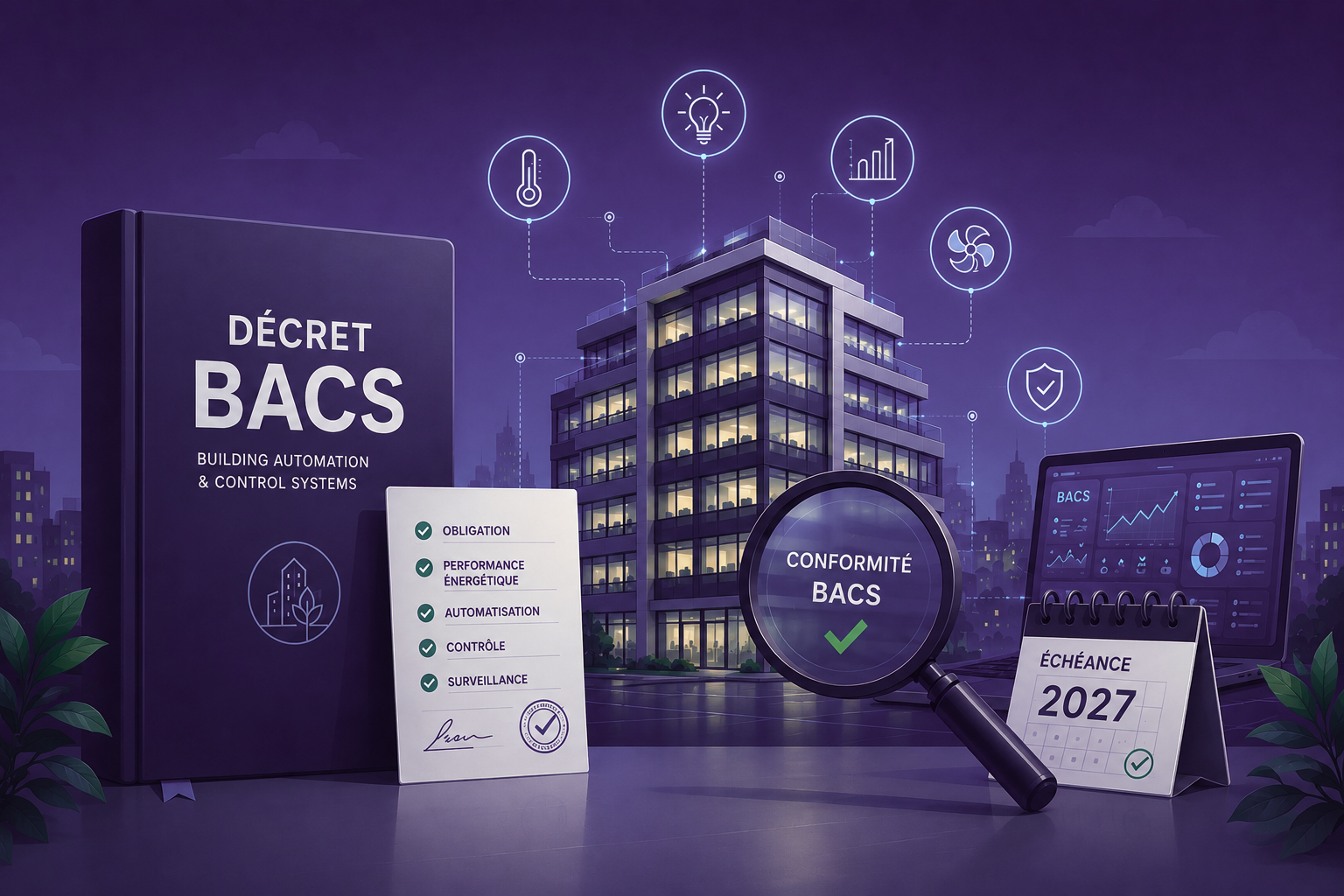
The BACS Decree (Building Automation & Control Systems) mandates the installation of automation and control systems in certain commercial buildings. This system must monitor, measure, and optimize technical equipment to reduce energy consumption and improve the building's energy efficiency.
France has committed to energy reduction targets for its building stock. The Tertiary Decree sets a clear objective.
-40% by 2030.
-50% by 2040.
-60% by 2050.
This applies to any building over 1,000 m².
The role of the Tertiary Decree is to set the goals. The BACS Decree provides the technical means to achieve them by making the installation of an equipment control system mandatory. Without this tool, the goals of the Tertiary Decree are difficult to reach.
The two texts are therefore inseparable; one sets the goals, the other mandates the means to achieve them.
Who is affected by the BACS Decree?
The BACS Decree applies to commercial buildings equipped with heating, air conditioning, or ventilation systems with a power output exceeding 70 kW (or 290 kW, depending on the deadline applicable to your building). Heating and cooling power are not added together. These are two separate meters, and if either one exceeds the threshold, your building is no longer compliant.
Practical example : your hotel has a 50 kW boiler for heating the rooms and a 45 kW chiller for air conditioning the restaurant. On paper, that adds up to 95 kW, putting you well above the 70 kW threshold. In reality, no. We look at heating (50 kW) and cooling (45 kW) separately, and neither one exceeds the threshold.
- One small exception to keep in mind : reversible heat pumps (those that provide both heating AND cooling with the same equipment) do not follow this strict separation logic. For these, the higher power rating between heating and cooling modes is used, not the sum.
- Second pitfall: power ratings are only cumulative if the equipment is connected to the same hydraulic network. Three independent 25 kW wall-mounted boilers that are not interconnected allow the building to remain below the threshold. However, if these same three boilers feed into a single shared heating network, then you do indeed add them up, bringing you to 75 kW of nominal power.
What are the requirements?
The decree is specific about what a BACS must be capable of. In practical terms, it must perform 5 functions:
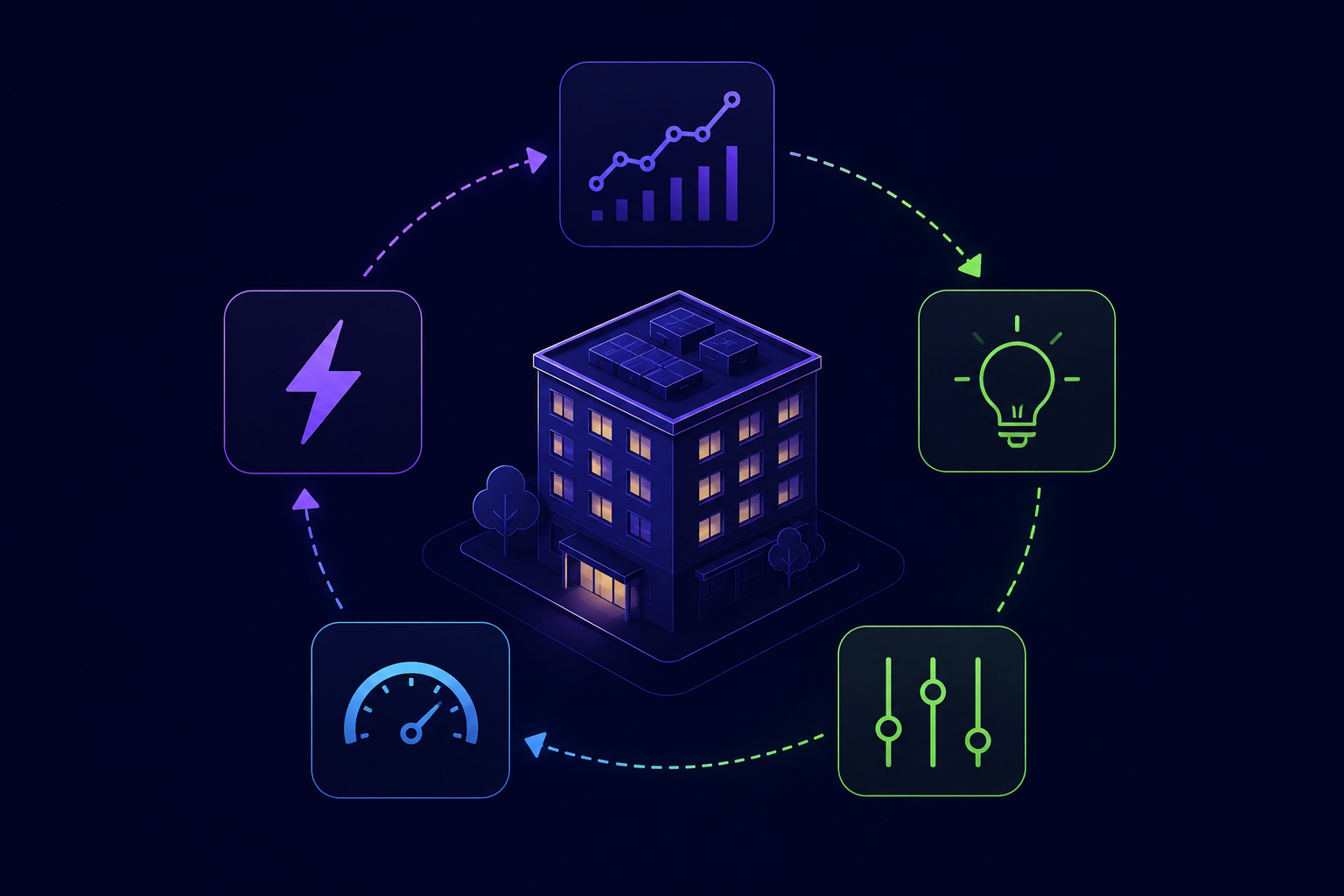
- Monitor and analyze : record energy production and consumption data to identify irregularities and optimize the building's energy performance.
- Benchmark against a reference : compare the building's performance against reference values.
- Detect irregularities : identify a loss of efficiency or a malfunction in equipment and alert the operator.
- Be interoperable : communicate with the building's various technical systems, regardless of the protocol or manufacturer.
- Allow manual control : provide the option for manual shutdown and autonomous management of equipment connected to the BACS.
These functions apply to all of the building's technical systems: heating, air conditioning, ventilation, domestic hot water production, integrated lighting, on-site electricity generation, or any system that combines several of these uses.

BMS classes
Building Management Systems (BMS) are at the heart of the BACS Decree. The NF EN ISO 52120-1 standard classifies BMS into four energy performance levels, from D (non-automated) to A (high performance), based on the control capabilities implemented for each use (heating, lighting, ventilation, etc.).
However, be careful not to confuse two things: the ISO 52120-1 class measures technical performance by use, whereas compliance with the BACS Decree is verified against the functions required by the regulatory text (monitoring, comparison with a reference, drift detection, interoperability, manual control). These two scales are not strictly interchangeable.
In practical terms, this means two things:
- A BMS that achieves a "good" class on paper may, in the field, lack one of the 5 required functions (for example, interoperability with specific equipment) and therefore fail to be compliant despite a seemingly satisfactory class.
- Conversely, a BMS can fulfill the 5 functions of the decree for the systems present in the building without meeting all the criteria of the most demanding class, because the ISO standard requires prerequisites that are not necessarily covered (fine-tuned lighting control, blinds, predictive optimization, etc.) if those uses are outside the scope of the decree for your building.
The choice of class also directly impacts eligibility for financial aid: only classes A and B qualify for CEE energy savings bonuses via the BAT-TH-116sheet, which can represent a significant funding lever for your project.
.png)
How do you achieve compliance?
Even though it is not a major undertaking, BACS compliance cannot be improvised. Here are the key steps to comply with the decree.
- A preliminary technical audit identifies existing equipment, available communication protocols (BACnet, Modbus, KNX), and any gaps that need to be addressed.
- The choice of solution should be guided by the target BACS class, compatibility with existing systems, and the platform's ability to evolve over time.
- Deploying a next-generation cloud-based SaaS BMS minimizes the need for construction work by reusing existing equipment whenever it is compatible.
What are the risks of non-compliance?
The BACS Decree is part of the legal framework of the Construction and Housing Code. Operators who fail to meet deadlines face potential penalties, but more importantly, they face increasing risks during real estate transactions and energy audits.
Beyond regulatory risk, energy performance has also become a key criterion for valuing commercial assets. A building with high energy consumption and steep utility bills discourages investors and can negatively impact property value.
Achieving compliance with the BACS Decree is therefore not just about meeting a legal obligation: it also contributes to building modernization, improved operations, and long-term asset appreciation.
👉 Discover how new environmental requirements are changing your buildings
You might be interested in this
Explore more articles on energy management and smart buildings.

Ready to transform your energy management
Start with a personalized demo or a free audit of your facilities.
