Novotel Avignon Centre: installation of a smart BMS
How the Novotel Avignon is reducing its energy consumption by 300,000 kWh/year thanks to a Scorp-Io BMS


Context
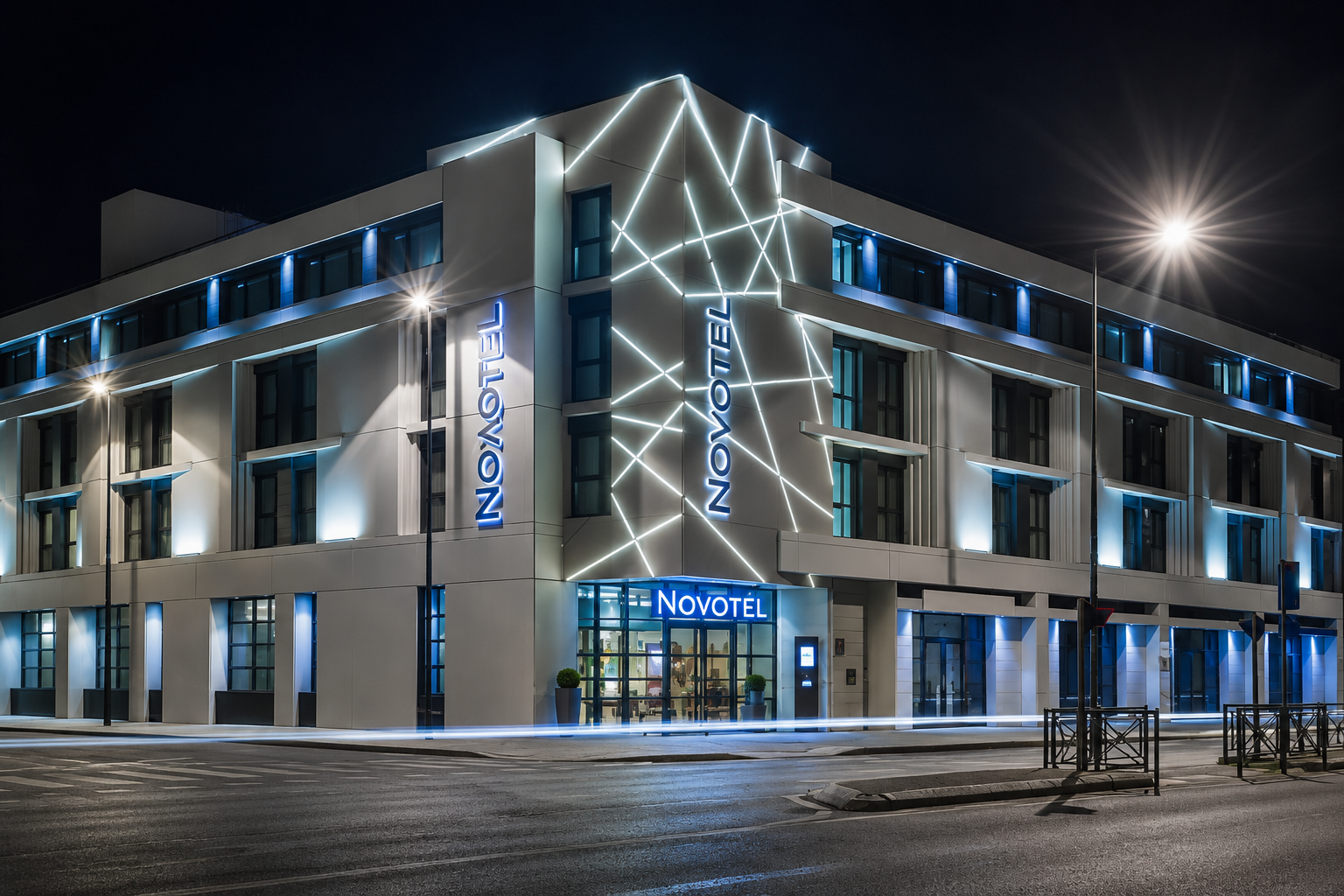
The Novotel Avignon Centre is a 4-star Accor group property: 150 rooms, 5 seminar rooms, and a sp, totaling 9,000 m² to manage daily, with high comfort standards, fluctuating occupancy levels, and increasing regulatory pressure.
The hotel already had a substantial technical infrastructure: Carrier heat pumps, De Dietrich gas boilers, and air handling units regulated by Siemens. While these were high-performance units individually, they operated in silos, without centralized supervision, communication between systems, or any overall visibility for the staff. In practical terms, the air conditioning could be running in an empty room while the boiler was ramping up on the other side of the building, with no way for anyone to know.
Goals and Challenges
The hotel faced three simultaneous challenges:
- The BACS Decree: This decree mandates the installation of a Building Management System (BMS) for commercial buildings with HVAC systems exceeding specific power thresholds. Additionally, the Tertiary Decree requires a progressive reduction in energy consumption, up to 60% by 2050, with annual reporting on the OPERAT platform. Without centralized supervision, it is impossible to measure progress, let alone report it.
- Comfort and operational efficiency: A hotel is not an office building. Spaces are constantly changing usage: a room is empty in the morning and occupied at night, or a seminar room is full at 10 a.m. and deserted by noon. Without intelligent control, comfort relies on fixed setpoints and manual adjustments. The result: wasted energy, limited responsiveness, and a heavy operational burden on technical teams.
- Developing an eco-responsible approach : The Accor group has strong environmental commitments. It wasn't enough to just lower a bill; they needed to measure, document, and prove concrete results with exportable data.
The Solution
The challenge was not to replace the equipment, but to make the existing technical infrastructure intelligent. SCORP-IO deployed its Class A BMS platform (ISO 52120 standard) to connect all existing equipment into a single supervision system, without major construction or the need to replace installed hardware.
Commissioning took 15 days, with no interruption to hotel operations. This speed is due to the solution's architecture: a SCORP-IO connector module installed on-site links the equipment (via their native protocols) to the cloud platform, whereas a traditional BMS would have required months of wiring and integration.
.png)
The technical architecture deployed
The SCORP-IO platform supervises and controls the entire HVAC system of the establishment:
- 4 Carrier heat pumps for heating and cooling production
- 190 fan coil units, one for each room and common area
- 190 wireless wall-mounted controllers using LoRaWAN, installed without chasing or wiring
- 9 Siemens Synco controllers managing the air handling units
- 2 De Dietrich gas boilers for heating
- 4 domestic hot water tanks
Everything is reported to the SCORP-IO cloud platform, which also integrates three external feeds: the hotel's PMS, local weather forecasts, and gas and electricity consumption data. The teams have access to an animated floor plan for each level, viewable on both computers and mobile devices, with notifications in the event of any drift.
The key lever: the BMS-PMS connection
This is the feature that changes everything in the hotel industry. The SCORP-IO platform is synchronized with FOLS, so the BMS knows the status of every room in real time: at check-out, the room automatically switches to reduced mode; an imminent arrival triggers a return to comfort settings in advance, ensuring the guest enters a room at the ideal temperature.
This control based on actual occupancy is complemented by three other features:
- Smart scheduling: scheduling heating and air conditioning periods based on actual hours
- Setpoint limits : seasonal ±3°C thresholds to prevent drift without restricting comfort
- Weather anticipation: adjusting production based on the weather to anticipate rather than react
Regarding CSR, the results are measured and exportable:
Behind these figures lies a simple reality: every empty room stops heating unnecessarily, and every new arrival finds a room already at the optimal comfort level. Energy is no longer wasted, but used wisely. This allows the Novotel Avignon to have a building that works for it, not against it, while complying with BACS and Tertiary decrees.
SCORP-IO has brought us real operational value. Thanks to their solution, we have gained complete visibility over all our technical equipment, which has simplified our daily operations and strengthened collaboration between the operations and maintenance teams. Energy performance improvements were noticeable from the very first weeks.
David, Deputy General Manager — Novotel Avignon Centre
FAQ: Hotel BMS
You might also be interested in
Discover other client case studies on energy management and smart buildings.